






The outer walls, defining boundaries of satellite communities, continued to be built, extending the system across the landscape up until the 19th century.
Purpose: Its primary function was defense.
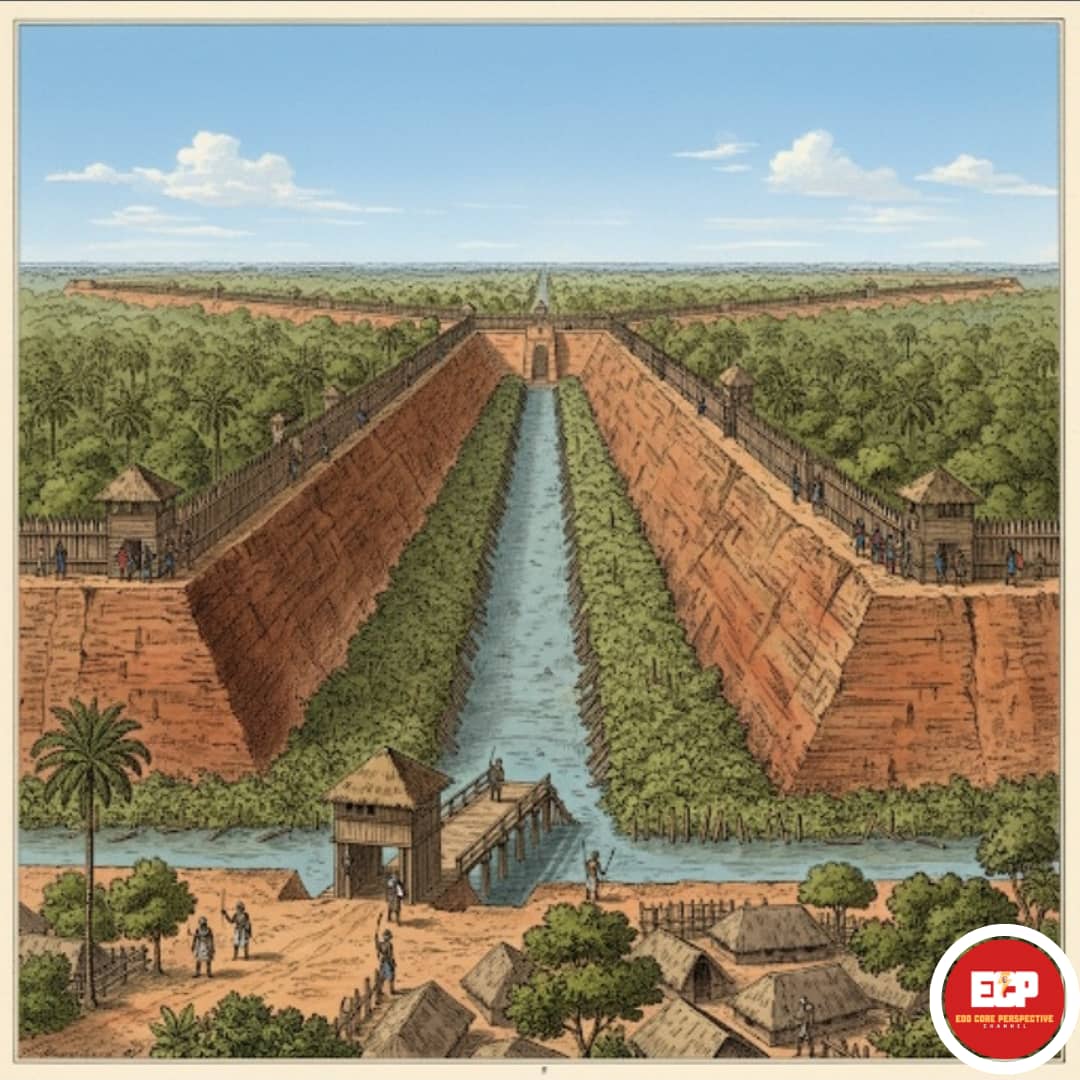
The moat (ditch) presented a major obstacle to attacking forces, and the raised wall (bank) provided a fortified vantage point for defenders.
Beyond the military, the walls also served to control trade and access to the capital, and symbolically asserted the territorial and political dominance of the Oba over the surrounding land.
Specifications:
The MOAT DITCH: Dug deep into the earth, it formed a terrifying U-shaped obstacle. At its deepest, it could reach over 20 feet (6 meters) in depth. The soil excavated from the ditch was piled inward to form the wall.
THE WALL (Bank): Rising up from the excavated earth, the bank created an immense earthen rampart, often standing as high as the moat was deep. This elevated position offered defenders a clear line of sight and attack.
MATERIAL: This structure was built entirely of earth—laterite soil—dug and piled using only basic hand tools such as hoes, spades, and baskets.
TOTAL: The full network, encompassing the capital's main walls and the labyrinthine boundaries of the surrounding territory, was estimated to span around 16,000 kilometers (10,000 miles) in total length, defining a vast area of control.
The Legacy & Fate
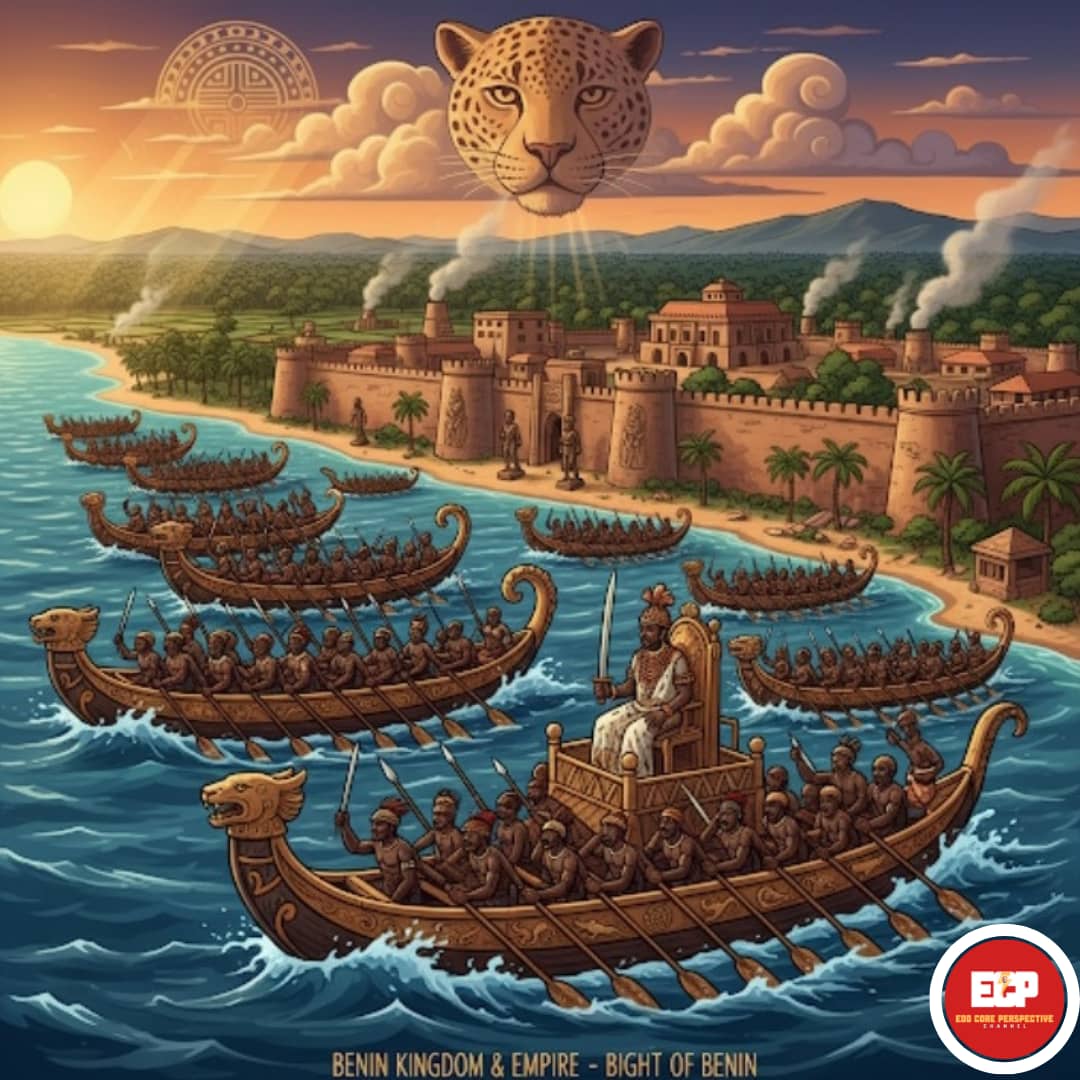
This earthen bulwark successfully protected the heart of the Benin Kingdom for centuries, becoming a hallmark of its enduring strength.
It was the largest earthwork structure in the world, a silent, monumental witness to the civilization that thrived behind it.
However, like all human creations, it met its breaking point.
When the British Punitive Expedition breached the capital in 1897, the Walls of Benin, for all their might, could not withstand the superior firepower brought against them.
The city was captured, and the great walls began their slow decline.
Today, while much of the system has been lost to erosion, development, and neglect, the remnants of the Iya still furrow the land.
They are a profound and sobering reminder of a mighty age, whispering to us the unparalleled power and organizational genius that once flourished here.
ECP Channel
_The Truth and Nothing But the Truth