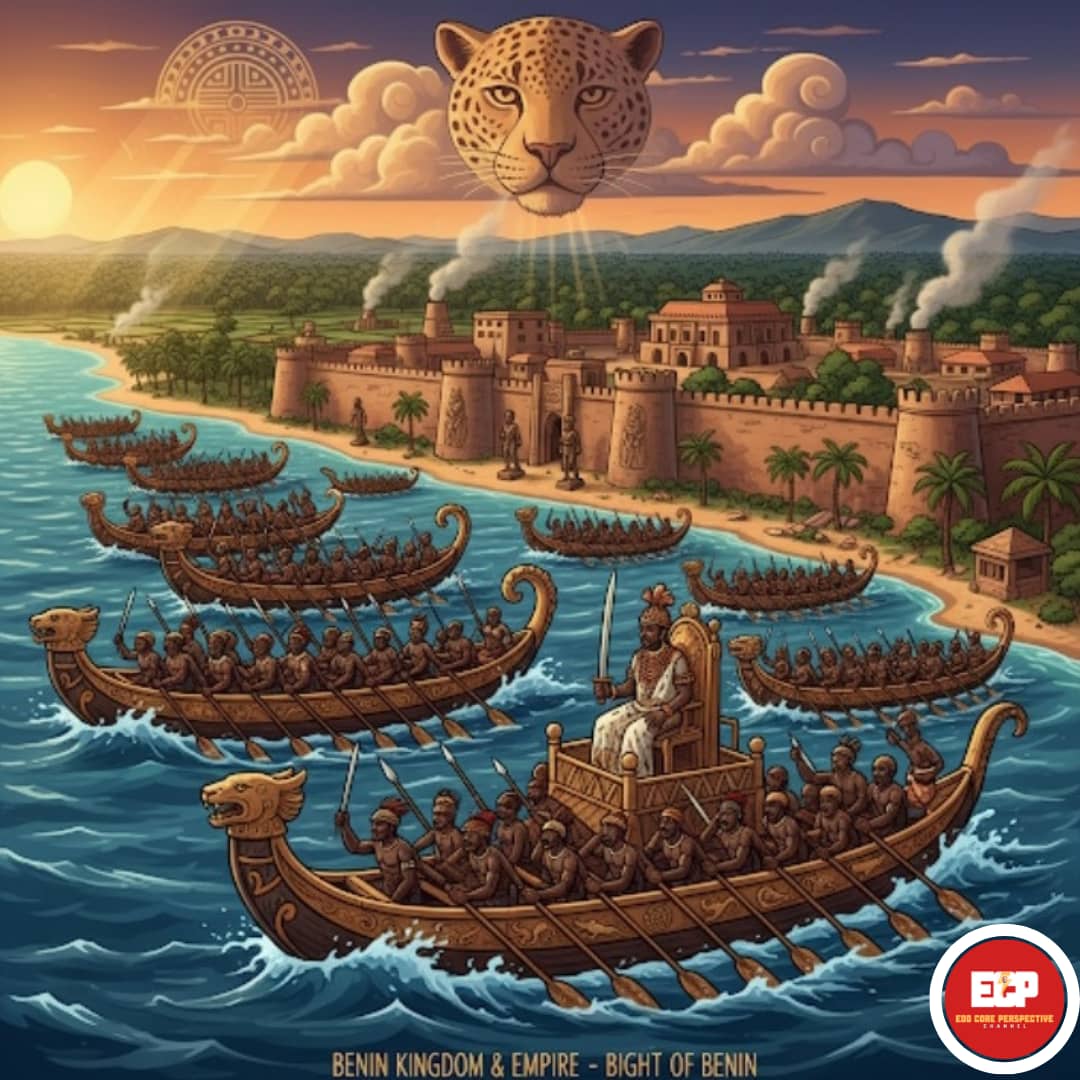




h century onward, ships from across the horizon threaded these waters.
Trade followed the wind and the river mouths: ivory, palm oil and crafted bronzes moved outward; goods of European manufacture moved inward.
.,.
But the Bight’s history turned darker as the Atlantic economy expanded.
Across the seventeenth and eighteenth centuries, the shoreline became part of the corridor that Europeans called the Slave Coast — a region where human lives were cruelly commodified, where forts and trading houses watched the surf while inland wars and raids supplied captives to waiting vessels.
Local rulers, coastal brokers and foreign merchants formed a grim commerce: alliances were struck, rivalries negotiated, and entire communities were pulled into a market that stretched far beyond the horizon.
The name “Bight of Benin” thus came to signify not only a geography but a network of human transactions, some of artistry and exchange, others of coercion and sorrow.
Maps and names shifted with power and time.
The title “Benin” traveled outward from the forest capital to the water’s edge and beyond, eventually marking not only the bay but also modern political lines and identities.
Ironically, the ancient kingdom that lent its name to the bight lies within today’s Nigeria, while the modern nation that now carries the name Benin sits to the west — testament to how names and borders are restless things.
To stand on that shore today is to watch a sea that remembers. The curve of water holds memory in its tides: of craftsmanship and court, of trade and tragedy, of peoples who met across its strand.
The Bight of Benin is, in one phrase, a meeting of land and ocean, of empire and exchange, and of the human stories that gave shape to a map.
ECP Channel <><>_The Truth and Nothing But the Truth_