






punitive expedition of that year (1897) did more than conquer—it abruptly terminated an existing system, dispersed its treasures across the world, and altered its institutional trajectory.
That rupture has never been fully addressed.
It is within this context that proponents invoke the Vatican analogy. Not as a copy-and-paste model, but as proof that modern states can accommodate historically grounded, small-scale sovereign or quasi-sovereign entities without disintegration.
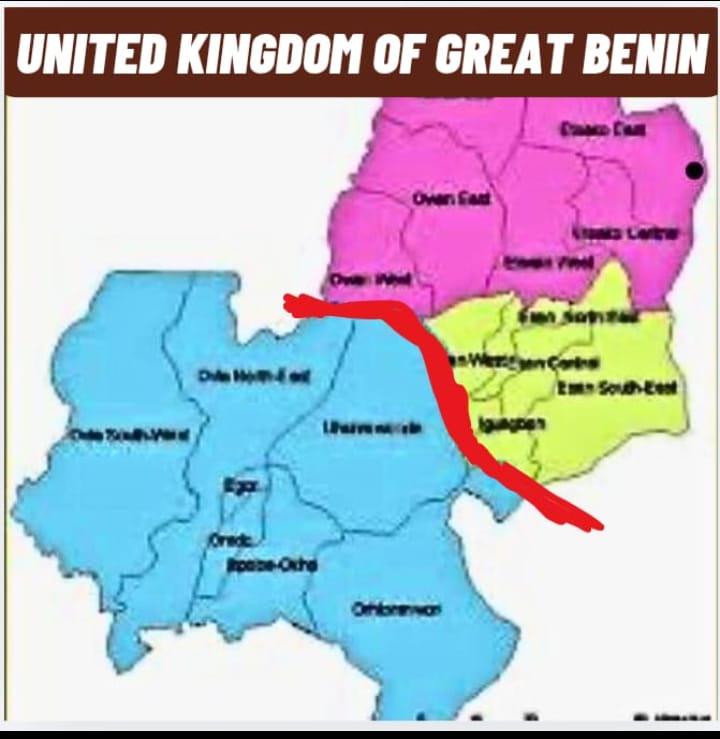
If carefully framed, a Benin arrangement could take the shape of a limited, clearly defined heritage enclave, anchored in Benin City, where:
The Oba of Benin exercises constitutionally recognized cultural authority;
Nigeria retains full control over defense, currency, and foreign affairs.
Governance is complementary, not competitive, with existing state structures.
This is why the term “cultural sovereignty zone” may be more appropriate than the emotionally loaded language of independence.
However, maturity demands that we also confront the difficult questions.
Can Nigeria’s already complex federal structure sustain another layer of constitutional uniqueness?
How do we prevent political actors from weaponizing such an arrangement?
What safeguards ensure that this remains cultural—not a gateway to fragmentation?
These are not reasons to reject the idea—but they are reasons to proceed with caution and intellectual honesty.
Importantly, the conversation must also shift from “what Benin wants” to “what Nigeria gains.”
Handled wisely, the benefits are tangible:
A global cultural renaissance, especially with the ongoing repatriation of Benin Bronzes.
A tourism and research hub capable of generating revenue and international partnerships.
A peaceful template for addressing historical grievances across the federation
Enhanced national prestige as a country willing to innovate rather than suppress identity.
Critics often raise the fear of precedent: if Benin, why not others?
But not all histories are equal. The Benin case is anchored in a singular event of global notoriety—the 1897 invasion—and a cultural legacy that commands worldwide recognition. Any comparable claim elsewhere would have to meet equally rigorous historical and moral standards.
In the end, this debate should not be reduced to slogans or sentiment.
It is about whether Nigeria is confident enough to accommodate history within its constitutional future, or whether it will continue to treat deeply rooted identities as inconveniences to be managed.
This Benin proposal, if properly refined, is not a threat. It is an invitation—
to think creatively, act justly, and govern wisely.
Nigeria’s unity need not be uniform to be strong.